Primary challengers emerge for select State House seats in Boston
by Yawu Miller
Voters in Massachusetts are genuinely dissatisfied with the slow pace of change on Beacon Hill, as evidenced by the 71.6 percent of the vote in favor of the 2024 ballot question authorizing the state auditor to audit the Legislature.
But will that dissatisfaction result in change at the ballot box in September? Democratic challengers to lawmakers representing Boston-area districts are hoping it will. To date, 6 of the 22 members of the Boston delegation on Beacon Hill are facing contested races.
Although Massachusetts consistently ranks last in the nation for contested legislative races, political observers say voters’ aggravation with the perpetual logjam on Beacon Hill as well as their frustration with Congress may be contributing to the high number of challengers this year.
“People are dissatisfied with the Trump administration and Congress and so they think everything is bad,” said Ward 12 Democratic Committee Chair Victoria Williams. “People are disgruntled with everything.”
At the congressional level, US Reps. Stephen Lynch, Richard Neal, and Democratic Minority Whip Catherine Clark are facing challengers and US Sen. Ed Markey is facing opposition from Congressman Seth Moulton.
In the First Suffolk state Senate district, currently held by Sen. Nick Collins, education activist Latoya Gayle and Lower Mills native Malik Shaw are also seeking the Democratic nomination for the seat, which represents South Boston and parts of Mattapan, Hyde Park, and Dorchester.
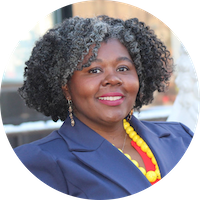
In the Norfolk Suffolk District, which includes parts of Jamaica Plain, Roslindale, Hyde Park, and West Roxbury as well as the towns of Dedham, Westwood, Norwood, and Walpole, student borrower advocate Persis Yu is challenging incumbent Mike Rush, who has represented the district for 10 years.
Also facing potential challengers are 15th Suffolk District Rep. Sam Montaño of Jamaica Plain, 10th District Rep. Bill McGregor of West Roxbury ,and 13th Suffolk Rep. Dan Hunt of Dorchester.
On Beacon Hill, activists say, the glacially paced legislative process is leading many groups to press for change through ballot initiatives, of which there may be as many as 12 this year.
“This has got to be one of the least productive State Houses in the country,” said political consultant Doug Chavez. “People want to see change. People are just frustrated. They feel the incumbents don’t represent them. They feel the Legislature isn’t doing enough with everything that’s happening at the federal level.”
As federal immigration officials adopt violations of Fourth Amendment rights and extrajudicial killings as policy, lawmakers on Beacon Hill may finally be poised to act on legislation to protect Massachusetts residents against federal over-reach. But their movement this year comes after the Safe Communities Act legislation that had been stalled in the State House since it was drafted in 2012.
“It’s nuts that we have threats, abductions, and murders around the country and they can’t pass immigrant protection, some of which have been around for seven legislative cycles,” said Rachel Poliner, a West Roxbury resident and activist.
She noted that progressives in Boston are also frustrated by the Senate’s inaction on legislation that Mayor Wu filed to raise taxes on commercial property and lower the rate on residential property.
“People are fuming that senators were dragging their feet for two years on Mayor Wu’s post-pandemic real estate tax formula adjustment proposal,” she said.
That latter issue may explain in part why two candidates are challenging incumbent senators. Gayle, who’s taking on Collins, appears to have Wu’s backing, as the two have been seen together at political events.
Daniel Lander, a senior policy advisor in the Wu administration, is challenging incumbent Will Brownsberger, who voted against Wu’s tax shift legislation. His 2nd Suffolk and Middlesex District includes parts of Boston, Watertown, and Belmont.
On the other hand, Rush, who voted for Wu’s legislation and is facing progressive challenger Persis Yu (shown above), received an endorsement from Wu in January.
Wu’s weighing in on Senate races may reflect her belief that she has political capital to spare, Chavez said, noting that Wu ran unopposed in the November election after crushing challenger Josh Kraft with 72 percent of the vote in the preliminary.
“She and her team may feel like they have a mandate and can risk spending political capital,” he said. “But she might find herself supporting candidates no one likes.”